

In Texas, divorces can be financially challenging. The main question is: who pays for a divorce in Texas? Typically, each party is generally responsible for its own legal fees. However, there are circumstances in which one spouse is required to pay the other’s attorney fees and court costs.
Key Takeaways
- In Texas, spouses generally bear their own attorney fees, which are considered community property and subject to equitable division based on each party’s financial circumstances.
- Spouses can petition the court for the other spouse to pay their legal fees if they face financial hardship during divorce proceedings. They can request temporary attorney fees through a Motion for Temporary Orders. The court may consider individual circumstances, such as income disparity or unique aspects of the couple’s situation, when deciding whether one spouse should pay the other’s legal fees.
- Judges may consider factors such as bad-faith conduct and each spouse’s financial resources when determining responsibility for attorney fees, which can affect the outcome of the divorce.
Introduction to Divorce Costs
Divorce in Texas often comes with a range of expenses that can add up quickly, making it important for both spouses to understand the financial implications before starting the divorce process. Common divorce costs include your own legal fees, attorney fees, court fees, and other legal expenses that arise as you work through the dissolution of your marriage. While Texas law generally expects each spouse to pay their own legal fees, there are situations where the court may order one spouse to cover some or all of the other’s attorney fees or court costs. Factors such as the complexity of the divorce, each spouse’s financial status, and the specific circumstances of the case can influence who ultimately pays for these expenses. By understanding the potential costs involved, you can better prepare for the financial realities of divorce and make informed decisions throughout the process.
How Divorce Attorney Fees Are Handled in Texas
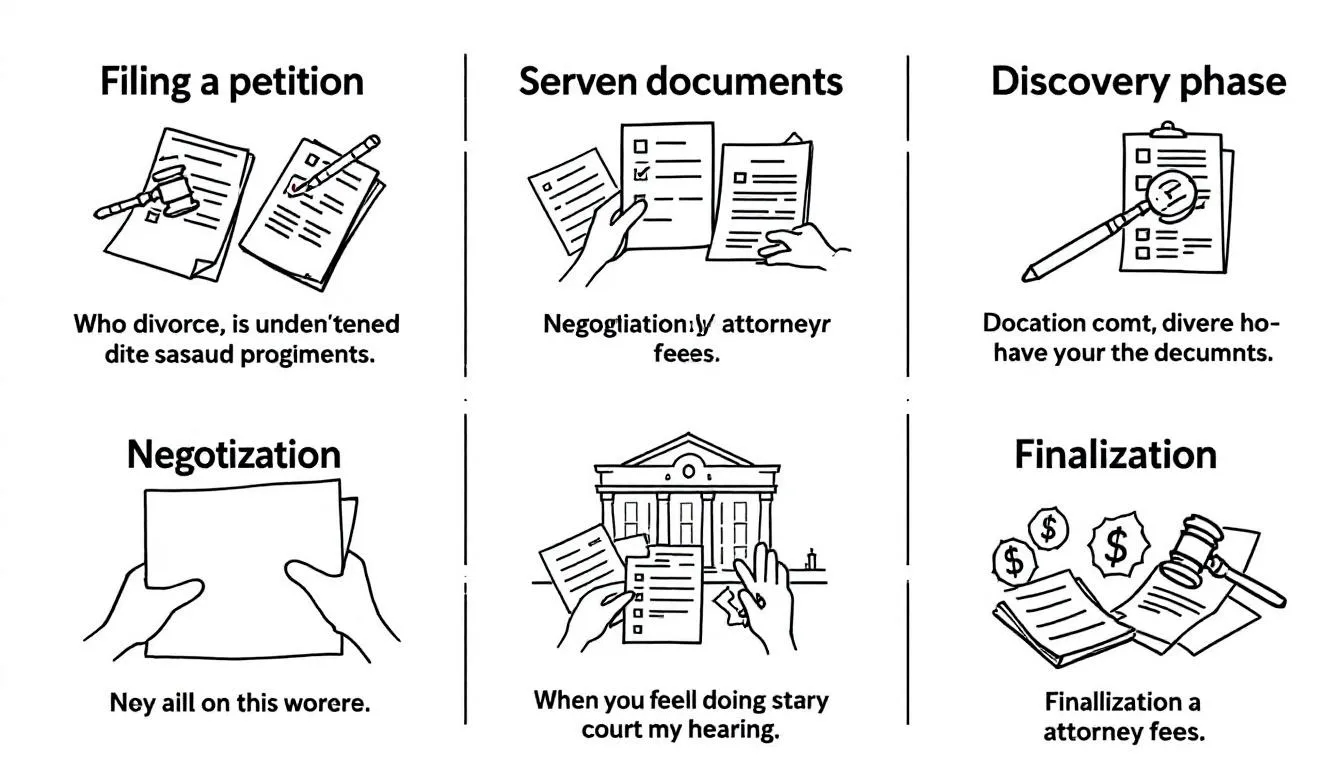
In Texas, divorce attorney fees are governed by the community property system. This means that both marital assets and debts are subject to a “just and right” division. Attorney’s fees are often treated as community liabilities and may be divided along with marital property and other assets. The community property system aims to ensure that attorney fees are divided equitably, taking into account the financial circumstances of both parties, especially in a divorce in Texas. Attorney fees are awarded at the end of the divorce after both parties have presented a detailed accounting of their legal fees.
Typically, each party is responsible for their own legal fees during the divorce process. This can be a significant burden, especially as legal expenses pile up. Both parties are required to prepare clear, detailed reports of their legal and divorce fees at the end of the divorce proceeding. Both spouses must present a detailed accounting of their legal fees at the end of the divorce process for the judge to rule on fees, which may include attorney’s fees as part of the division of marital property and other assets.
Attorney fees can represent a substantial amount of community debt owed by both spouses, along with certain costs. Understanding this aspect directly impacts the financial obligations of both parties post-divorce, including lawyer fees.
Role of a Divorce Attorney
An Austin divorce attorney is an essential ally during the Texas divorce process, offering both legal expertise and practical guidance as you navigate the complexities of family law. Your divorce attorney will help you understand your rights and responsibilities, including how attorney fees are handled and whether you might be eligible to have your spouse pay some or all of your legal fees. In many Texas divorce cases, a skilled attorney can advocate for you if you need your spouse to pay your attorney fees, especially when there is a significant difference in income or financial resources. By working with an experienced divorce attorney, you can ensure that your interests are protected, your legal obligations are clear, and you have the best chance of achieving a fair outcome in your divorce.
Requesting Your Spouse To Pay Attorney Fees
In some cases, you might find yourself unable to bear the financial burden of your own legal fees. Fortunately, Texas law allows you to request your higher-earning spouse to pay the other spouse’s attorney fees, spouse’s fees, or spouse’s legal fees, especially in cases of financial disparity or if your spouse has acted in bad faith or engaged in misconduct during the divorce process. In your original petition for divorce, you must ask the judge to order your spouse to pay for your divorce attorney fees. You can petition for an order requiring your spouse to cover your attorney fees, particularly if they earn significantly more or have made the divorce process more difficult.
Including your request for your spouse to pay for your attorney fees in your original divorce petition is crucial for consideration and should not be overlooked. Be sure to specify if you are seeking payment of the other spouse’s attorney fees. A judge only considers a request for one spouse to pay the other’s attorney fees if the request is included in the initial divorce petition. Facing interim financial hardship due to attorney fees? Requesting a Motion for Temporary Orders can address these urgent financial needs.
Filing a Motion for Temporary Orders
Experiencing financial hardship during the divorce process? Filing a Motion for Temporary Orders is a vital step. This motion can provide immediate relief by having one spouse cover the other’s reasonable attorney fees during the proceedings.
Temporary orders address urgent financial needs and ensure fair access to legal representation for both parties. These decisions are typically made during temporary order hearings in courts before the final decree, which provides essential financial support when it’s most needed.
Factors Influencing Who Pays Attorney Fees

A judge’s decision on who pays attorney fees in a Texas divorce is influenced by several factors, primarily the financial status of both spouses. The judge evaluates each party’s earning potential and financial resources to ensure a fair distribution of legal costs. If one spouse has a higher income or significantly more money than the other, the judge may require them to pay the other spouse’s legal fees.
The judge may also consider whether one spouse supported the family at the expense of their career. Bad-faith actions during the divorce process, like ignoring court orders, can shift the financial responsibility for legal fees.
Impact of Bad Faith Actions on Attorney Fees

Bad faith actions can significantly impact decisions on attorney fees. If one spouse disrupts the divorce process by concealing assets, refusing to negotiate, or intentionally delaying proceedings, the judge may require them to cover the other spouse’s attorney fees. When bad faith is proven, the court may order the spouse to pay the other party’s attorney fees as a penalty.
This aims to ensure that no party unfairly bears the financial burden due to the other’s misconduct, and that the party pays for any resulting damages.
Examples of Bad Faith Actions
Bad faith actions in a divorce can take many forms. Common examples include:
- Hiding assets
- Defying court orders
- Failing to disclose financial information
- Intentionally delaying the divorce process
- Not complying with discovery requests
Such behaviors can result in one spouse paying the other spouse’s attorney fees.
What Happens If You Can’t Afford Legal Representation?

Unable to afford legal representation? Request temporary attorney fees through a Motion for Interim Attorney Fees, outlining your financial challenges and needs for the judge’s consideration.
The judge will consider factors such as accrued attorney fees and each spouse’s financial status. Interim attorney fees can be deducted from the benefactor’s share of the property to ensure financial transparency.
Court Fees and Divorce Cases
Court fees are a significant part of the divorce process in Texas and can vary depending on the specifics of your case and the requirements of the court. In addition to attorney fees, you may encounter filing fees for submitting divorce papers, service fees for delivering documents, and other court-related expenses throughout the divorce proceedings. Texas courts recognize that these costs can be burdensome, especially if one spouse has considerably more financial resources than the other. In such cases, the court may order one spouse to pay the other’s court fees to ensure both parties have fair access to the legal process. Understanding the types of court fees involved and how the court may allocate them can help you plan for the financial aspects of your divorce and avoid unexpected expenses as your case progresses.
Timing of Attorney Fee Decisions
Attorney fee decisions are typically made after both parties submit financial documents, usually during final property settlement discussions. The timing of these decisions can vary depending on the complexity of the divorce case. Unnecessary delays and disruptions caused by one spouse can influence the timing and outcome.
Judges may consider the complexity of child custody disputes and property division when deciding on a judge’s decision regarding attorney fees.
Community Property and Legal Fees
In Texas, a community property state, all marital assets and debts, including attorney fees, are considered community property until a divorce is finalized. In the Lone Star State, community property laws govern the division of marital assets and attorney fees.
Under the community property framework, attorney fees are divided to achieve a ‘just and right’ division, ensuring a fair sharing of financial obligations within the community estate.
Alternative Dispute Resolution and Divorce Costs
Alternative dispute resolution (ADR) methods, such as mediation and arbitration, offer Texas couples a way to resolve divorce issues more efficiently and cost-effectively than traditional litigation. By choosing to attend mediation, spouses can work together to reach agreements on property division, spousal support, and other key matters, often resulting in a fair settlement that reduces the overall financial burden of divorce. ADR can help minimize divorce costs by avoiding unnecessary delays and the higher legal fees associated with going to trial. With the guidance of experienced divorce attorneys, couples can navigate the ADR process, make informed decisions, and focus on solutions that meet their unique needs—ultimately saving time, money, and stress during a challenging period.
Appealing Attorney Fee Decisions
Disagree with an attorney fee decision? You can appeal within a specified period, typically 30 days after the final divorce decree, by demonstrating that the judge abused their discretion or misapplied the law in divorce court.
Post-judgment proceedings may also award attorneys’ fees if one party seeks enforcement of the divorce decree, including the attorney’s own fees.
Tips for Minimizing Divorce Attorney Fees

Strategic planning and effective communication can help minimize divorce attorney fees. Organize the necessary divorce papers in advance so your attorney can focus on legal strategy rather than searching for paperwork.
Emails and voicemails are more cost-effective than in-person meetings. Brief and to-the-point communications can help limit billable hours with your attorney and reduce legal bills. Establishing a rapport with your lawyer’s staff can reduce costs by allowing you to ask procedural questions without needing your lawyer’s time.
Seeking Legal Assistance
Seeking professional legal assistance is crucial for navigating the complexities of divorce cases. SMB Law, PC offers comprehensive legal services, including family law, personal injury, and real estate disputes.
Shane M. Boasberg, the founder and senior lawyer, has over 20 years of experience and is dedicated to safeguarding your legal rights and ensuring you receive the outcome you desire or justice. Clients describe Shane M. Boasberg as personable and genuinely concerned for his clients.
SMB Law, PC serves clients across Austin and Central Texas, providing experienced legal representation during one of the most challenging times in your life.
Summary
Navigating the financial complexities of a divorce in Texas requires a clear understanding of how attorney fees are handled. From the community property system to potential bad faith actions, various factors influence who ultimately pays these fees. Mediation is often required before the court, and a refusal to negotiate can negatively impact fee assignments.
Understanding your options, such as asking your spouse to pay or filing a Motion for Temporary Orders, can alleviate some financial burdens. Seeking professional legal assistance is crucial in ensuring your rights are protected and that you achieve a fair settlement.
As you move forward, remember that knowledge is power. Equip yourself with the necessary information, seek competent legal advice, and approach the process with confidence and clarity.
Frequently Asked Questions
Can I request my spouse to pay my attorney fees during a divorce in Texas?
Yes, in Texas, you can request that your spouse pay your attorney fees during a divorce, especially if there is a significant income disparity or if they are complicating the proceedings.
What should I do if I can’t afford legal representation during my divorce?
If you can’t afford legal representation during your divorce, consider filing a Motion for Interim Attorney Fees to request temporary financial assistance for legal support. This can help ensure you have the representation you need during the process.
What are some examples of bad-faith actions that could impact attorney fee decisions?
Bad-faith actions that could affect attorney fee decisions include concealing assets, defying court orders, intentionally delaying proceedings, and making false allegations. Such behaviors can significantly influence the court’s decision to award fees.
When are decisions about attorney fees typically made during a divorce?
Decisions about attorney fees in a divorce are typically made after financial documentation is submitted, often during the final property settlement discussions. This timing ensures that all financial aspects are considered before determining fees.
Can I appeal a decision regarding attorney fees?
You can appeal a decision regarding attorney fees within a specific time frame, usually 30 days, if you believe there was an abuse of discretion or legal misapplication by the judge.